

From Cotton Ranch to Pickled Planes to General Aviation
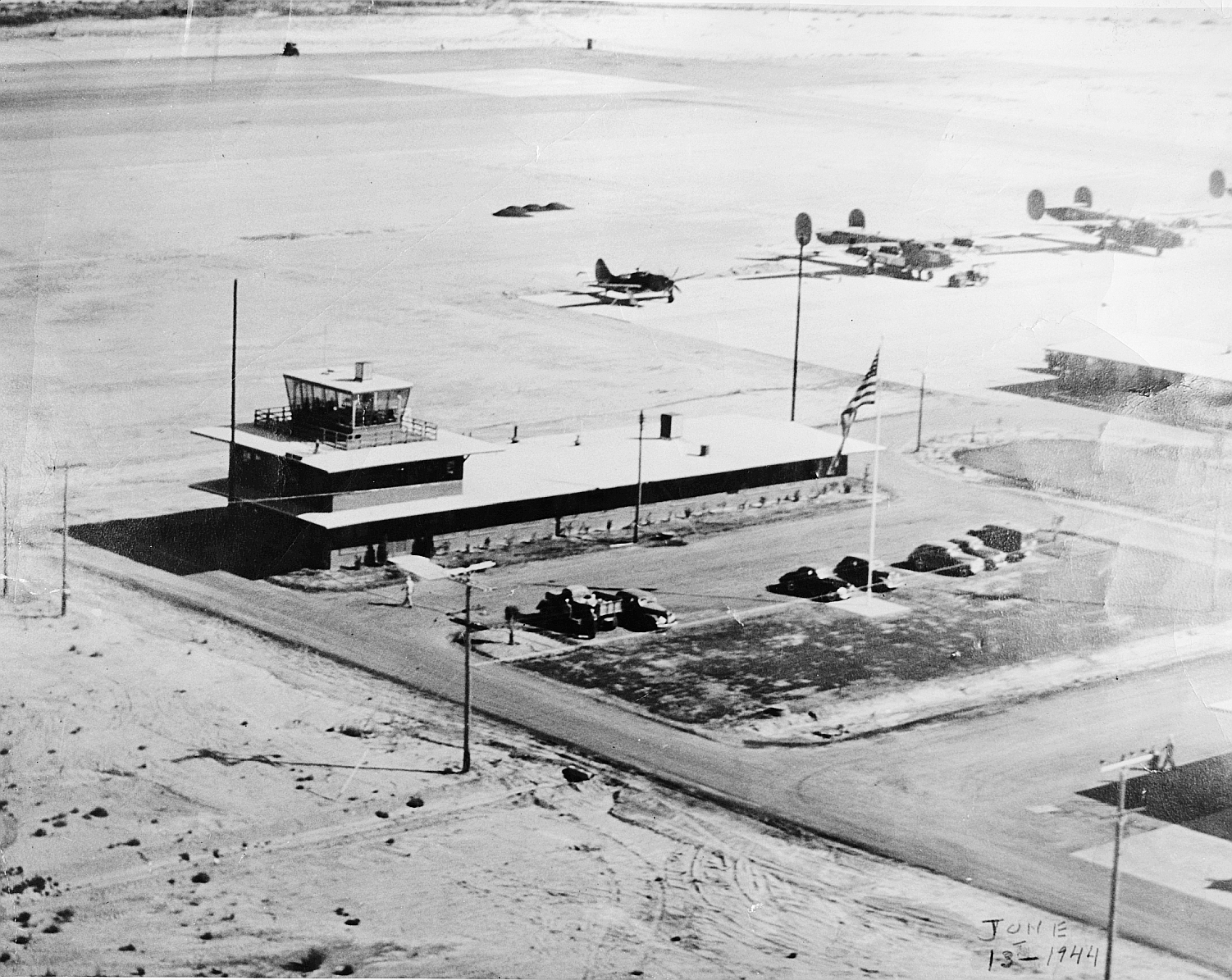
Happy anniversary to Phoenix Goodyear Airport! The airport is the result of a long history of community development, aircraft manufacturing and military service. It was purchased by the city of Phoenix in 1968 and today is a vital general aviation hub for Phoenix’s West Valley.
Goodyear has its roots with a cotton ranch started in 1917. Because of World War I, Goodyear Tire and Rubber Company could not get long-staple cotton from Egypt for making their pneumatic tires. Phoenix’s West Valley proved to have the perfect cotton growing conditions.
World War II brought the need for massive production of military aircraft components and a plant was built at the cotton ranch. In 1943, the U.S. Navy ordered a portion of the Goodyear-Arizona plant to be utilized for aircraft modification. An area adjoining the plant was established as the U.S. Naval Air Facility to modify planes, test aircraft and deliver them as needed. The Navy constructed a landing field, a very large hangar, and 6,000-foot runway. The War ended and the Naval Air Facility was given the task of “pickling” or preserving and storing aircraft. By 1950, about 2,500 planes had been “pickled” at Goodyear.
In the 1960s, the City of Phoenix began searching for satellite airport sites to help relieve the volume of small aircraft using Phoenix Sky Harbor. The Naval Air Facility was put on surplus and the City bought it. Many names for the new airport were considered including Sky Haven, Hassayampa, White Tanks, West Phoenix, Tri-City and Goodlitch. The Phoenix City Council approved the name Phoenix-Litchfield Municipal Airport, but the city changed the name in 1986 to Phoenix Goodyear Airport.
 For many years, a visit to the Goodyear airport was like a trip in a time capsule with facilities built in the 1940s. The old terminal was demolished in 1999 and on March 10, 2000, a new terminal was dedicated.
Today, the airport provides critical service to corporate and private pilots who come to the Valley of the Sun for major sporting events such as NASCAR and the Super Bowl. And earlier this year, it became home to the United Aviate Academy, training future airline pilots for United.